
Pediatric Irritable Bowel Syndrome Clinical Trials
Living with IBS can be unpredictable, affecting your daily routine and overall well-being. 3A Research is conducting Irritable Bowel Syndrome Clinical Trials to study investigational options for managing symptoms. See if you qualify to participate and contribute to important research.
Application for Current Clinical Research Study

IBS Clinical Trials
What is IBS and Why is Research Important?
Irritable Bowel Syndrome (IBS) is a common digestive condition that can cause bloating, abdominal pain, diarrhea, or constipation. For some, managing symptoms can be difficult, especially with conditions like Pediatric Irritable Bowel Syndrome with Constipation (IBS-C), which affects younger individuals.
While there are treatment options available, responses vary. That’s why clinical research is essential. Irritable Bowel Syndrome Clinical Trials in El Paso, TX aim to evaluate possible treatments of irritable bowel syndrome and better understand the condition’s impact.
By taking part in an Irritable Bowel Syndrome Research Study in Texas, participants help researchers explore different approaches to IBS care. These studies follow strict protocols and may offer study-related care at no cost. If you’re interested in learning more, see if you qualify for IBS Clinical Trials in El Paso, TX today.
Important Study Information
Participation in Irritable Bowel Syndrome Clinical Trials is voluntary. These studies evaluate investigational treatments, which may not provide specific results. Research is conducted under strict guidelines to ensure participant safety. If you’re considering joining an Irritable Bowel Syndrome Research Study in Texas, speak with your doctor to determine if it’s right for you.
- Age
- 12-17
- Gender
- Male & Female
- Condition
- Pediatric Irritable Bowel Syndrome with Constipation (IBS-C)
- Location
- Texas


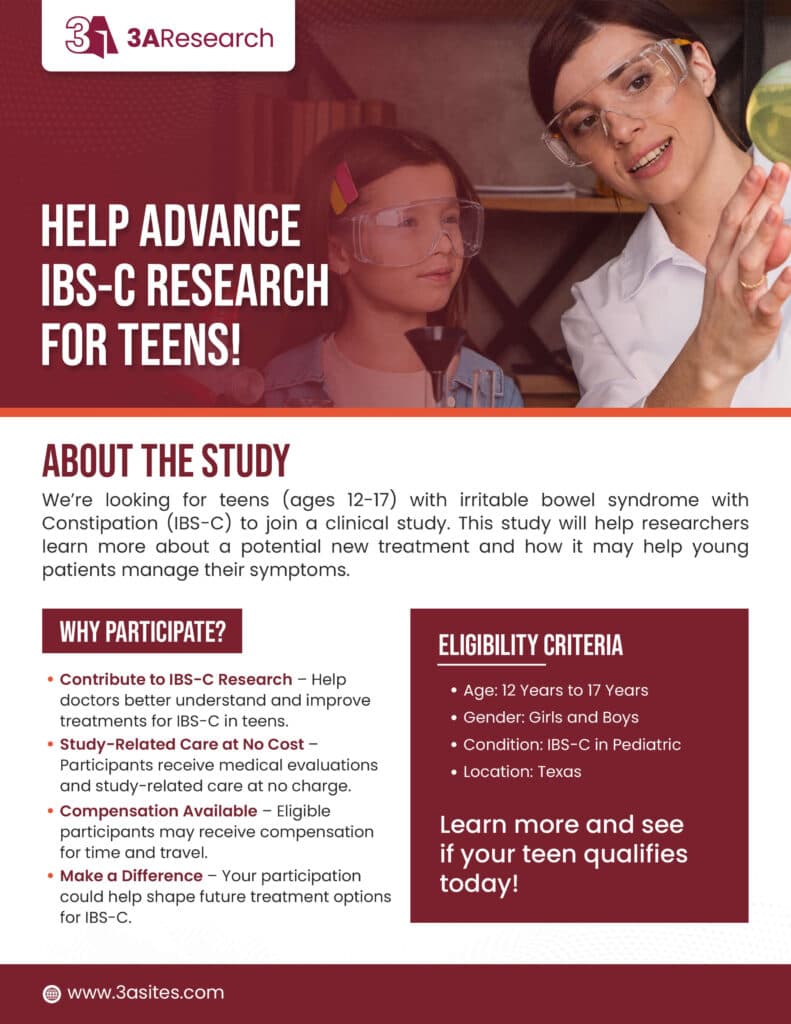
About Pediatric IBS-C Study
This study is testing an investigational drug for pediatric IBS with constipation (IBS-C) in children and teens aged 12 to 17. The goal is to understand how well the drug works, its safety, and how the body handles it.
The participants will take either the investigational drug at different doses or a placebo. Before starting, there is a 2-week screening period to check eligibility, which includes tracking IBS symptoms using an electronic diary (eDiary). Participants will continue recording their symptoms daily throughout the study.
During the study, participants will visit the clinic for health check-ups and safety monitoring. After completing the study, those not joining the long-term extension study will have a final follow-up visit.
This research could help improve understanding of IBS-C in young patients and explore potential new treatment options.
How IBS Clinical Trials Work
If you participate in a Pediatric IBS Clinical Trial in El Paso, TX, you will receive study-related care from medical professionals. Each study has specific criteria and procedures. Clinical research helps expand knowledge about IBS and its management. If you’re interested, explore available Irritable Bowel Syndrome Clinical Trials in El Paso, TX today.
Frequently Asked Questions
Get answers to common questions about Atopic Dermatitis Clinical Trials, eligibility, study procedures, and participation benefits.
IBS doesn’t have a cure. However, its symptoms can be managed through dietary modifications such as including more fiber and avoiding trigger foods. Moreover, stress management, medications, and lifestyle changes like regular exercise and hydration also helps.
Treatment includes a high-fiber diet, hydration, probiotics, and medications like stool softeners if needed. Managing stress and anxiety can also help improve symptoms.
Yes, IBS can cause constipation, a condition known as IBS-C (Irritable Bowel Syndrome with Constipation). This occurs when the digestive system moves food too slowly, leading to infrequent or hard stools, bloating, and abdominal pain.
IBS is a long-term condition, but symptoms can come and go. Some children experience symptoms for a few months, while others may deal with it into adulthood. Managing triggers and maintaining a healthy lifestyle can help reduce flare-ups.
No form of IBS is contagious. It is a functional disorder of the digestive system, meaning it is related to how the gut works rather than an infection that can be spread.